Case Study
Advance
Launching a 12-market subscriber paywall across a national publisher network
Overview
As Visual Design Director at Advance, a national digital media and publishing group, I led research and design initiatives driving subscriber experience and revenue generation across a major digital media portfolio — including NJ.com, AL.com, MassLive.com, and OregonLive.com.
The work spanned standardizing design systems across brands and conceiving a subscription paywall strategy to diversify revenue beyond advertising.

Problem
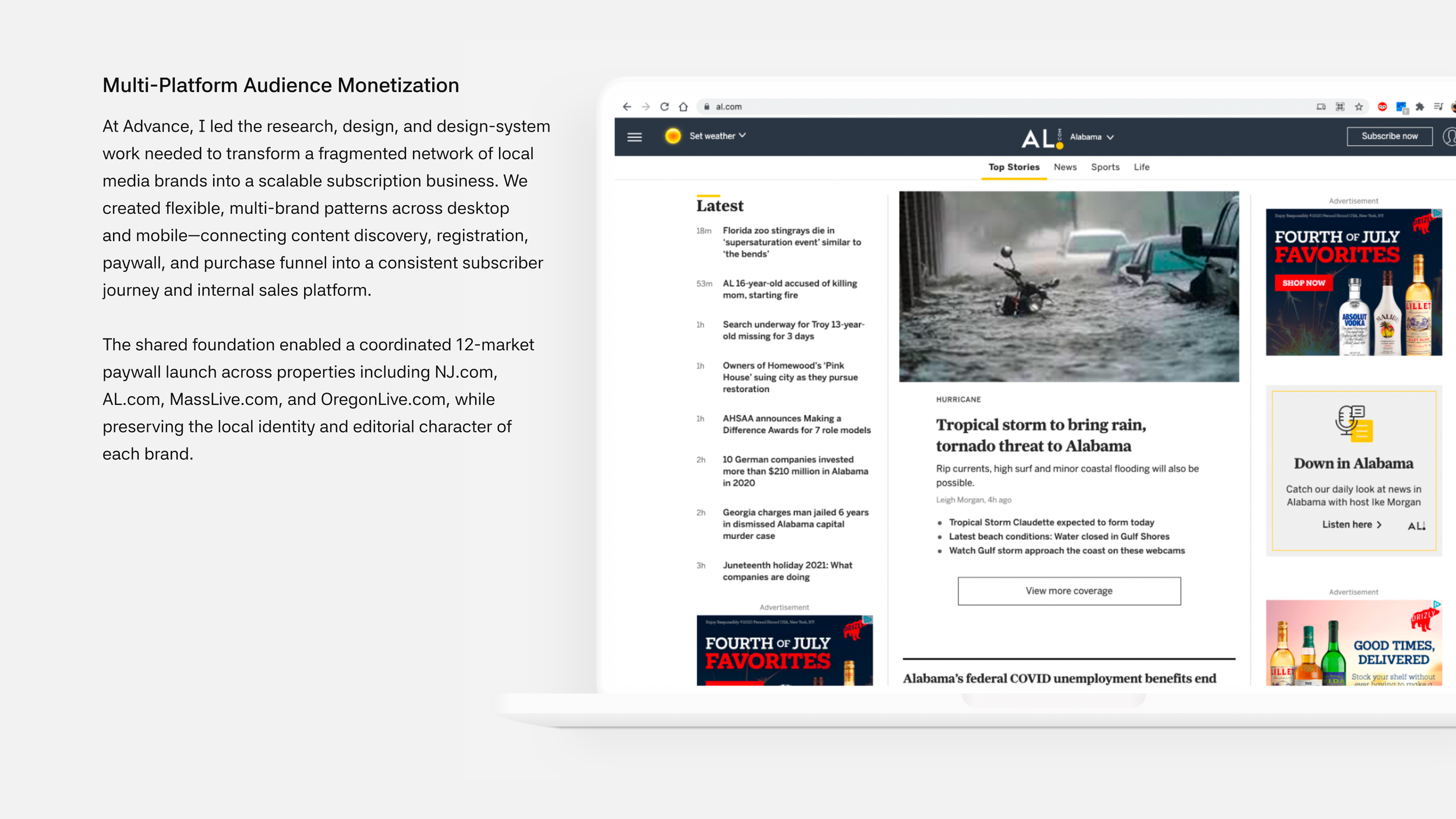
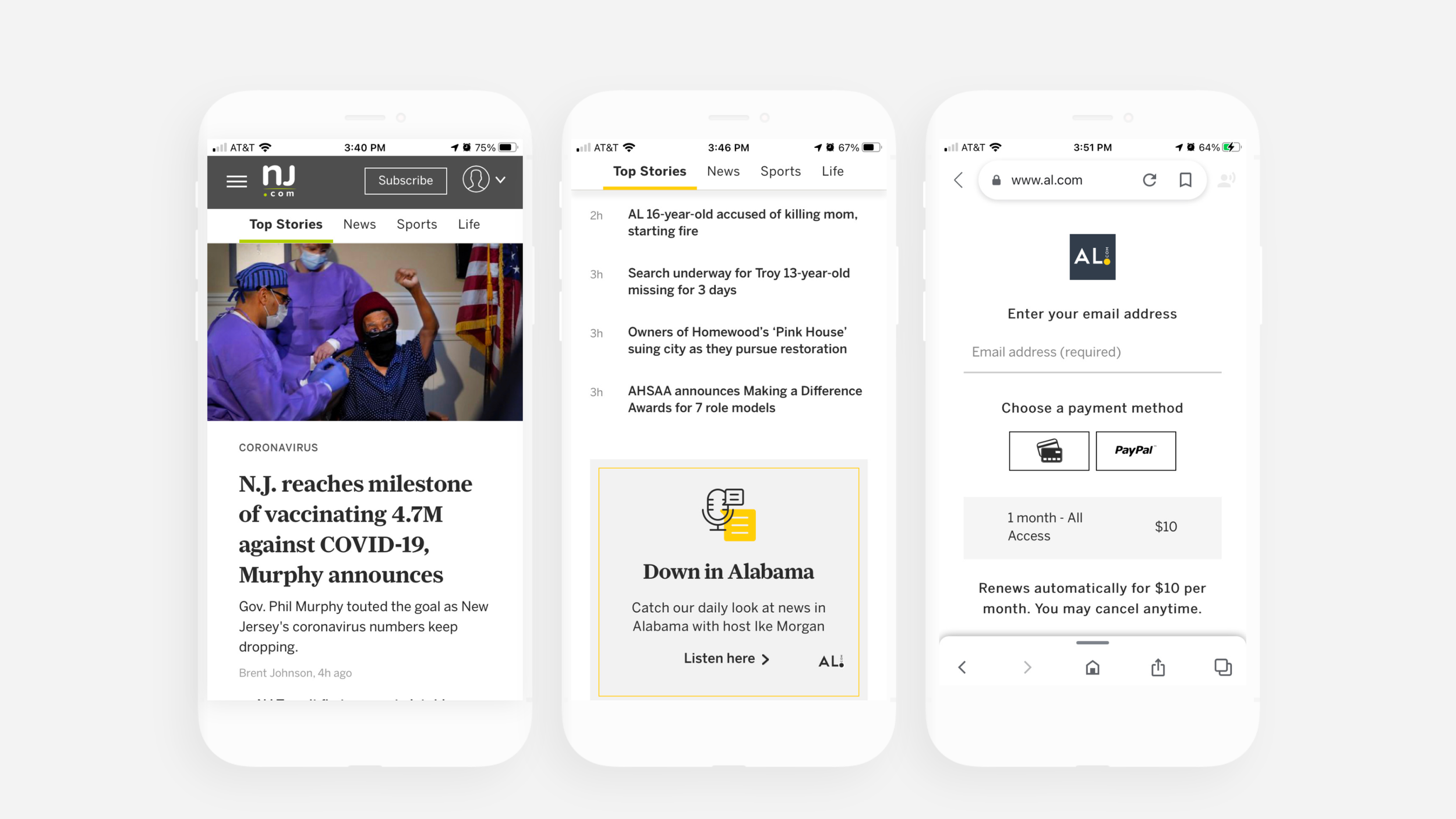
Advance's digital properties operated as a fragmented portfolio of local news brands, each with its own product patterns and no shared path to subscription revenue. Launching a paywall at this scale meant building a consistent product and design foundation across markets before monetization could work.
Success required a design system that could flex across distinct local brands while supporting a unified subscriber experience and measurement model.
Approach
I led the design strategy across the design systems and subscriber product work. My team and I:
- Led national research and design initiatives driving subscriber experience and revenue generation platforms across the portfolio.
- Standardized multi-brand design systems to streamline product delivery and increase multi-platform audience monetization.
- Concepted and launched a subscriber paywall across 12 markets.
"Jacin brings fresh perspectives, sound judgment, and a willingness to challenge conventional thinking — driving innovation and meaningful organizational change."
Sr. Director, Advance
"Jacin leads with integrity, transparency, and a bias for action — building trust through honest communication."
Sr. Director, Advance
Results
The paywall launch and design system standardization turned a fragmented portfolio into a scalable subscriber revenue engine.
12
markets launched
250K
paid digital subscribers, from zero
9M+
registered users
$136M
approximate subscriber revenue
Leadership takeaway
A subscription business can't launch market by market if the design foundation isn't shared. Standardizing the system first is what let 12 markets move at once instead of one at a time.